
Introduction
Privacy is no longer a legal afterthought in mobile app development, it is a core product requirement. As mobile apps collect increasing volumes of personal, behavioral, and location-based data, governments across the world have introduced strict privacy laws to protect users and hold developers accountable.
For mobile developers, ignoring privacy regulations can result in severe consequences: app store removals, heavy financial penalties, reputational damage, and loss of user trust. On the other hand, apps that are built with privacy in mind enjoy higher credibility, stronger retention, and long-term sustainability.
This blog provides a research-based explanation of privacy laws for mobile developers, covering major global regulations, developer responsibilities, common compliance challenges, and best practices for building privacy-first mobile applications.
Why Privacy Laws Matter in Mobile App Development
Mobile apps operate in a uniquely sensitive environment. They often access personal data such as names, email addresses, phone numbers, location data, contacts, device identifiers, payment information, and even biometric data. Unlike websites, mobile apps can collect this information continuously and in the background.
Privacy laws exist to ensure that:
- Users understand what data is being collected
- Data is collected only for legitimate purposes
- Personal information is stored securely
- Users retain control over their data
For developers, privacy compliance is not just a legal obligation, it directly impacts user trust, app store approval, and long-term growth.
Key Global Privacy Laws Mobile Developers Must Know
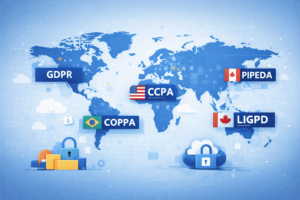
General Data Protection Regulation (GDPR – European Union)
GDPR is one of the most comprehensive privacy laws in the world and applies to any mobile app that processes data of EU residents, regardless of where the developer is located.
Under GDPR, developers must ensure lawful data processing, meaning data can only be collected with a valid legal basis such as user consent or contractual necessity. Users have strong rights, including the right to access their data, correct inaccuracies, request deletion, and withdraw consent at any time.
For mobile developers, GDPR requires clear privacy policies, explicit consent mechanisms, data minimization, and strong security safeguards. Violations can result in fines of up to €20 million or 4% of global annual revenue.
California Consumer Privacy Act (CCPA / CPRA – United States)
CCPA, enhanced by the California Privacy Rights Act (CPRA), governs how businesses handle personal data of California residents. It applies to many mobile apps, particularly those that monetize user data through analytics, advertising, or third-party integrations.
This law grants users the right to know what personal data is collected, request deletion, opt out of data sharing or selling, and limit the use of sensitive personal information.
For mobile developers, compliance requires transparent data disclosures, opt-out mechanisms, and clear instructions for exercising user rights. Unlike GDPR, CCPA focuses heavily on consumer transparency and choice rather than consent alone.
Children’s Online Privacy Protection Act (COPPA – United States)
COPPA is especially critical for mobile developers building apps for children under the age of 13. It restricts the collection of personal data from minors without verifiable parental consent.
Developers must be extremely cautious with analytics, ads, push notifications, and third-party SDKs in children’s apps. Failure to comply can lead to enforcement actions, app store bans, and substantial penalties.
Personal Data Protection Laws in Other Regions
Many countries now have their own privacy regulations that affect mobile apps:
- United Kingdom: UK GDPR (post-Brexit version of GDPR)
- Canada: PIPEDA
- Brazil: LGPD
- India: Digital Personal Data Protection Act
- Middle East: Data protection laws in UAE, Saudi Arabia, and Qatar
For globally distributed apps, privacy compliance is no longer regional, it is international by default.
What Privacy Laws Require from Mobile Developers
Transparent Data Collection
Developers must clearly inform users about what data is collected, why it is collected, and how it is used. This information must be presented in an accessible privacy policy and, where required, within the app itself.
Hidden data collection or vague explanations are one of the most common compliance violations.
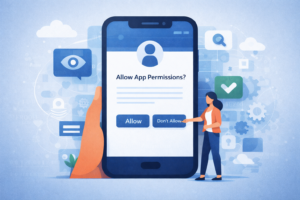
Meaningful User Consent
Consent must be informed, specific, and freely given. Pre-checked boxes, forced permissions, or misleading prompts are not considered valid consent under most privacy laws.
For mobile developers, this means designing permission requests carefully and allowing users to continue using the app even if they deny non-essential permissions.
Data Minimization
Privacy laws emphasize collecting only the data that is absolutely necessary. Excessive permissions or unnecessary data storage increases legal risk and undermines user trust.
Developers should regularly audit data flows and remove unused or unjustified data collection points.
Secure Data Storage and Transmission
Security is a legal requirement, not just a technical best practice. Personal data must be protected against unauthorized access, breaches, and leaks.
This includes encryption, secure authentication, access controls, and safe integration of third-party services.
User Rights Management
Modern privacy laws give users control over their data. Developers must provide mechanisms for users to:
- Access their personal data
- Correct inaccurate data
- Request deletion
- Withdraw consent
Ignoring these rights can result in enforcement actions even if no data breach occurs.
App Store Privacy Requirements
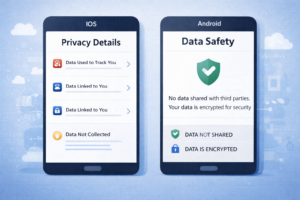
In addition to government regulations, mobile developers must comply with platform-level privacy rules.
Apple and Google require developers to:
- Declare data collection practices
- Justify permissions
- Disclose third-party data sharing
- Provide privacy labels and policies
Failure to comply can lead to app rejection or removal, regardless of legal compliance status.
Common Privacy Mistakes Mobile Developers Make

Many compliance issues arise not from malicious intent, but from lack of awareness. Common mistakes include collecting more data than necessary, using third-party SDKs without understanding their data practices, failing to update privacy policies, and treating privacy as a legal checkbox rather than a product feature.
Another frequent issue is launching an app without considering how privacy requirements evolve over time. Laws change, app features expand, and new integrations are added, privacy compliance must be ongoing.
Privacy by Design: The Right Approach
Modern privacy regulations encourage a concept known as privacy by design. This means embedding privacy considerations into every stage of the app development lifecycle, from ideation and design to development, testing, and post-launch updates.
Privacy by design leads to better user experiences, fewer legal risks, and stronger long-term trust. It also reduces costly rework caused by retrofitting compliance after launch.
The Business Impact of Privacy Compliance

Privacy compliance is often viewed as a cost, but in reality, it is a competitive advantage. Users are increasingly aware of data misuse and prefer apps that respect their privacy.
Apps that are transparent, secure, and respectful of user data tend to see higher retention, better reviews, and stronger brand loyalty. In contrast, privacy violations can permanently damage credibility, even if fines are avoided.
Conclusion
Privacy laws have fundamentally changed how mobile apps are built, distributed, and monetized. For mobile developers, understanding and complying with privacy regulations is no longer optional, it is essential for legal protection, platform approval, and user trust.
By adopting a privacy-first mindset, staying informed about global regulations, and embedding compliance into the app development process, developers can build applications that are not only legally compliant but also trusted, scalable, and future-ready.
In the modern mobile ecosystem, respecting user privacy is not a limitation, it is a foundation for sustainable success.
Build Privacy-First Apps with Confidence
Navigating privacy laws in mobile app development can be complex, but compliance should never slow innovation. At Ambsan Digital, we help businesses design and develop secure, privacy-first mobile applications that meet global data protection regulations without compromising performance or user experience.
From privacy-by-design architecture and compliant data flows to secure integrations and post-launch compliance support, our team ensures your app is built to scale, safely and responsibly.
Planning a mobile app or updating an existing one?
Connect with Ambsan Digital to build compliant, future-ready applications users can trust.