
Introduction
In today’s digital-first economy, app design is no longer about aesthetics alone. For businesses, app design directly influences user trust, engagement, retention, and revenue. A beautifully coded app with poor design will struggle just as much as a visually appealing app with weak functionality.
Modern users expect apps to be intuitive, fast, secure, and emotionally engaging. The most successful business apps are inspired not by trends alone, but by user behavior, psychology, brand identity, and real-world use cases.
This blog explores app design inspiration for businesses, focusing on how organizations can design apps that align with business goals while delivering meaningful user experiences.
Why App Design Matters for Business Success
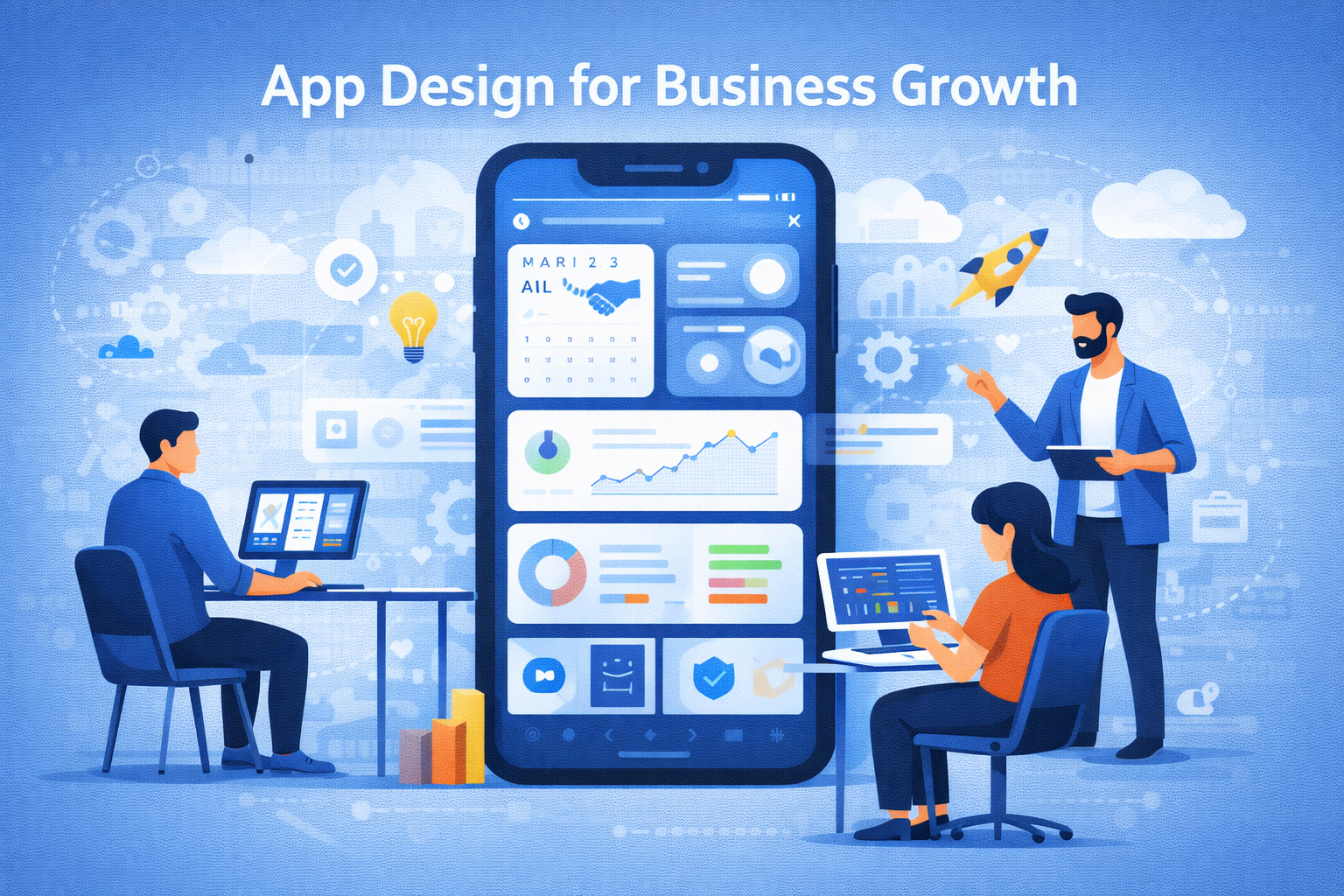
App design is often the first interaction a user has with a business’s digital product. Within seconds, users form opinions about credibility, quality, and usability. If navigation feels confusing or the interface appears outdated, users are likely to abandon the app permanently.
Well-designed apps improve:
- User onboarding and activation
- Task completion and efficiency
- Brand perception and trust
- Retention and lifetime value
For businesses, design is not decoration, it is a growth lever.
Design Inspiration Starts with Business Goals
Before looking at colors, layouts, or animations, businesses must clarify why the app exists. Design inspiration should always stem from business objectives.
An app built to generate leads requires a different design approach than one focused on operational efficiency or subscriptions. Clarity of purpose influences everything from navigation structure to call-to-action placement.
Successful app design aligns three elements:
- Business goals
- User needs
- Technical feasibility
When these elements are balanced, design decisions become intentional rather than decorative.
User-Centric Design as the Foundation
The most powerful app design inspiration comes from users themselves. Businesses often look outward for inspiration, competitor apps, design galleries, or trends, while ignoring the most important source: real user behavior.
User-centric design focuses on understanding how people think, act, and feel while using an app. This includes identifying pain points, usage contexts, and emotional triggers.
Apps that are designed around user journeys rather than features tend to feel simpler, faster, and more intuitive. Inspiration drawn from real user problems leads to designs that solve issues instead of showcasing complexity.
Minimalism with Purpose
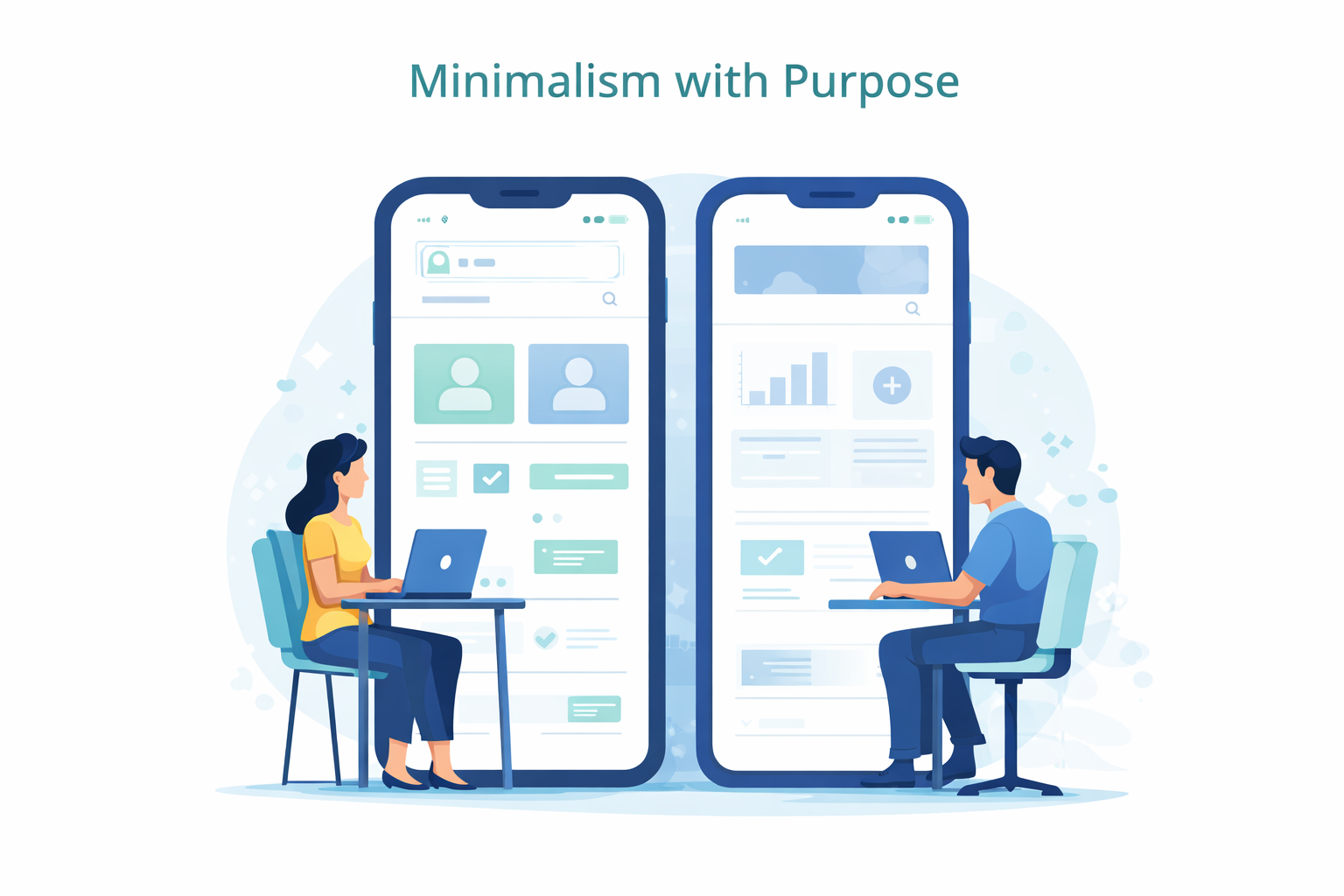
Many modern business apps follow minimalist design principles, but minimalism does not mean emptiness. It means removing friction and distraction.
Minimalist app design emphasizes:
- Clear visual hierarchy
- Focused screens with a single primary action
- Simple typography and color usage
- Reduced cognitive load
Businesses should take inspiration from apps that guide users effortlessly from one action to the next. Every element on the screen should justify its presence.
Brand-Driven App Design Inspiration
Strong apps feel like a natural extension of the brand. Design inspiration should be rooted in brand identity, not disconnected from it.
Brand-driven app design uses:
- Consistent color palettes
- Recognizable typography
- Familiar tone and microcopy
- Visual elements aligned with brand personality
For businesses, this consistency builds trust. Users should feel the same confidence using the app that they feel when interacting with the brand’s website, marketing, or customer service.
Designing for Speed and Performance Perception
Users associate good design with speed, even when actual performance differences are minimal. Smooth transitions, responsive buttons, and thoughtful loading states create a sense of reliability.
Inspiration can be drawn from apps that:
- Use skeleton screens instead of spinners
- Provide visual feedback for every interaction
- Avoid unnecessary animations that slow navigation
Business apps that feel fast and responsive are perceived as more professional and trustworthy.
Inspiration from Microinteractions
Microinteractions are small design details that guide users, provide feedback, and create delight. They include button states, notifications, progress indicators, and subtle animations.
Well-designed microinteractions:
- Confirm actions (e.g., successful submission)
- Reduce uncertainty
- Humanize the digital experience
For businesses, these small details can significantly improve usability and satisfaction without adding complexity.
Designing for Accessibility and Inclusivity
Modern app design inspiration must include accessibility. Businesses that ignore accessibility exclude a significant portion of users and risk legal and reputational consequences.
Accessible design considers:
- Readable text sizes and contrast
- Clear touch targets
- Screen reader compatibility
- Simple navigation patterns
Inclusive design not only expands reach but also improves usability for all users, not just those with disabilities.
Cross-Platform Consistency with Native Familiarity

Businesses often struggle to balance consistency across platforms with platform-specific expectations. Great app design inspiration comes from understanding that users expect familiarity.
While brand consistency matters, Android and iOS users are accustomed to different navigation patterns and interactions. Successful business apps respect platform conventions while maintaining a unified visual identity.
This approach reduces learning curves and increases adoption.
Data-Driven Design Decisions
The best app design inspiration is validated by data. Businesses should continuously analyze how users interact with screens, features, and flows.
Heatmaps, session recordings, and funnel analytics reveal:
- Where users drop off
- Which elements attract attention
- Which actions are ignored
Design inspired by data evolves over time, ensuring the app improves rather than stagnates.
Learning from Industry-Specific Apps
Design inspiration should also come from within the same industry. A fintech app, for example, requires a different design language than a healthcare or logistics app.
Industry-specific inspiration helps businesses:
- Meet user expectations
- Follow compliance and usability norms
- Avoid unnecessary experimentation
Borrowing proven patterns while adding unique brand differentiation leads to safer and more effective design outcomes.
The Role of Prototyping in Design Inspiration
Prototypes are not just validation tools—they are inspiration tools. Seeing an idea in motion often reveals better design directions than static mockups.
Interactive prototypes allow businesses to:
- Test flows early
- Experiment with layouts
- Gather stakeholder feedback
- Reduce rework during development
Design inspiration evolves faster when ideas are tested, not just discussed.
Future-Oriented App Design Inspiration
As technology evolves, businesses must design apps that are adaptable. Inspiration should include future considerations such as personalization, AI-driven experiences, privacy-by-design, and scalability.
Apps that are flexible by design are easier to update, expand, and refine as user needs change.
Conclusion
App design inspiration for businesses should never be about copying trends or competitors. It should be about understanding users, aligning with business goals, and delivering clarity through design.
Successful business apps are built on thoughtful design choices, choices informed by research, data, brand identity, and real-world usage. When design is treated as a strategic asset rather than a visual layer, apps become powerful tools for growth, efficiency, and customer loyalty.
In a competitive digital landscape, great app design is not optional—it is a business advantage.
Turn App Design Inspiration into a High-Impact Product
Great app design starts with inspiration, but success comes from execution. At Ambsan Digital, we help businesses transform ideas into intuitive, scalable, and performance-driven mobile applications designed around real user behavior and measurable business goals.
From user research and UX strategy to UI design, development, and post-launch optimization, our team ensures your app is not only visually compelling but also built to drive engagement, trust, and long-term growth.
Planning a new app or redesigning an existing one?
Partner with Ambsan Digital to create digital products that users love and businesses rely on.