
Introduction
Android and iOS dominate the global smartphone ecosystem, powering billions of devices and shaping how users interact with digital products. While both platforms enable access to apps, services, and content, they differ significantly in user demographics, behavior, monetization potential, and regional dominance.
For businesses, startups, and app developers, understanding the Android vs iOS users and revenue comparison is critical. Choosing the right platform or defining a cross-platform strategy can directly impact reach, revenue, and long-term scalability.
This blog provides a research-driven comparison of Android and iOS, analyzing user base size, regional trends, revenue generation, spending behavior, app economics, and strategic implications.
1. Global Market Share: Android vs iOS Users
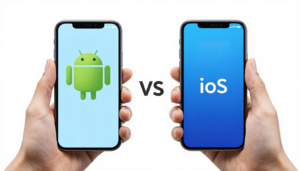
Android User Base
Android is the most widely used mobile operating system globally.
- Accounts for 70–75% of global smartphone users
- Dominant in emerging and price-sensitive markets
- Available across thousands of device models and price points
Key drivers of Android adoption:
- Affordable smartphones
- Wide manufacturer ecosystem (Samsung, Xiaomi, Oppo, Vivo, etc.)
- Strong presence in Asia, Africa, Latin America, and Eastern Europe
iOS User Base
iOS holds a smaller share of global users but a highly influential one.
- Accounts for 25–30% of global smartphone users
- Strong loyalty and long device lifecycles
- Concentrated in high-income regions
Key drivers of iOS adoption:
- Premium brand positioning
- Seamless ecosystem (iPhone, iPad, Mac, Apple Watch)
- Strong privacy and security perception
Key Insight
Android wins on scale, iOS wins on influence.
2. Regional Distribution of Android and iOS Users
Android-Dominant Regions
- India
- Southeast Asia
- Africa
- Latin America
- Middle East (mixed but Android-heavy)
In these regions, affordability and device variety make Android the primary choice.
iOS-Dominant or Strong Regions
- United States
- Canada
- Western Europe
- Japan
- Australia
In these markets, iOS often commands 40–60% market share, sometimes higher in urban and professional demographics.
Strategic Implication
- Global reach → Android-first
- Premium markets → iOS-first or iOS-priority
3. Revenue Comparison: Android vs iOS


Despite Android’s massive user base, iOS consistently generates more app revenue.
App Store Revenue Share
- iOS generates ~60–65% of global app revenue
- Android generates ~35–40% of global app revenue
This revenue gap has remained consistent over the years.
Why iOS Generates More Revenue
- Higher average user income
- Stronger willingness to pay for apps and subscriptions
- Higher conversion rates for in-app purchases
- More mature subscription culture
Android Revenue Characteristics
- Revenue heavily dependent on ads
- High download volume but lower ARPU (Average Revenue Per User)
- Strong performance in freemium and ad-supported models
4. User Spending Behavior
iOS Users
- Spend more per app
- More likely to subscribe
- Higher lifetime value (LTV)
- Lower churn for premium services
Typical iOS user behavior:
- Paid apps
- Subscriptions (streaming, fitness, productivity)
- In-app purchases in games and utilities
Android Users
- Price-sensitive
- Prefer free apps
- More tolerant of ads
- High engagement but lower direct spending
Typical Android user behavior:
- Free-to-use apps
- Ad-supported models
- Microtransactions in gaming
Key Insight
iOS users monetize through payments; Android users monetize through volume and ads.
5. App Downloads vs Revenue Paradox
This is one of the most important contrasts:
- Android accounts for ~70% of global app downloads
- iOS accounts for ~60%+ of global app revenue
This creates a paradox where:
- Android apps achieve massive reach
- iOS apps achieve higher profitability
For developers, this means success metrics differ by platform.
6. App Categories: Platform Performance Comparison
Gaming
- iOS dominates revenue
- Android dominates downloads
- iOS users spend more on in-game purchases
E-Commerce
- iOS users show higher conversion rates
- Android users generate higher traffic volume
- iOS customers often have higher order values
Fintech
- Android leads adoption in emerging markets
- iOS leads premium fintech and investment apps
- Security perception favors iOS
Health & Fitness
- iOS users subscribe more
- Android users adopt more broadly
- Apple ecosystem (Watch, HealthKit) boosts retention
Productivity & SaaS
- iOS favored for premium tools
- Android favored for accessibility and reach
- Enterprise apps often require both
7. Developer Economics: Android vs iOS
Development & Testing
- Android: More device fragmentation, higher testing effort
- iOS: Fewer devices, controlled ecosystem
Time to Monetization
- iOS apps often monetize faster
- Android apps take longer to reach profitability but scale wider
App Store Policies
- Apple’s App Store is more restrictive
- Google Play offers more flexibility
- Both charge similar commission structures
Security & Fraud
- iOS has lower piracy rates
- Android faces higher piracy risks
- Payment security perception is stronger on iOS
8. Advertising & Monetization Models
Android Monetization Strengths
- In-app advertising
- Rewarded ads
- High impression volume
- Emerging market ad growth
iOS Monetization Strengths
- Subscriptions
- Direct payments
- Premium app purchases
- Higher CPMs despite privacy restrictions
Post-Privacy Shift Reality
- iOS privacy changes impacted ad targeting
- Android remains more advertiser-friendly
- Businesses increasingly use hybrid monetization models
9. Enterprise & Business App Perspective
For B2B and enterprise apps:
- iOS is preferred for executives and decision-makers
- Android is preferred for field staff, logistics, and large-scale deployments
- Many enterprises adopt cross-platform strategies
Mobile-first enterprises rarely choose one platform only anymore.
10. Strategic Decision: Android, iOS, or Both?
Choose Android-First If:
- Targeting emerging markets
- Need massive user acquisition
- Rely on ad-based revenue
- Focus on accessibility and affordability
Choose iOS-First If:
- Targeting premium users
- Subscription or paid app model
- B2B, fintech, or SaaS focus
- Faster monetization is critical
Choose Cross-Platform If:
- Global audience
- Scalable growth strategy
- Brand consistency matters
- Long-term ROI is the goal
11. Future Outlook
Looking ahead:
- Android will continue to dominate user volume
- iOS will continue to dominate revenue
- Cross-platform frameworks will reduce development gaps
- AI, personalization, and privacy will shape monetization
- Platform choice will be driven more by business model than technology
The gap between users vs revenue is expected to remain, but strategies will evolve.
Conclusion
The Android vs iOS comparison is not about which platform is better it’s about what aligns with your business goals.
Android delivers unmatched global reach and engagement at scale. iOS delivers superior monetization, loyalty, and premium user value. Successful companies understand these differences and design platform strategies accordingly.
In today’s mobile-first economy, the smartest approach is not choosing sides but leveraging the strengths of both ecosystems to build sustainable, scalable digital products.