
Introduction
Artificial Intelligence (AI) is no longer a futuristic concept, it is actively reshaping the global education landscape. From personalizing learning paths to automating assessments and predicting student performance, AI is changing how knowledge is delivered, consumed, and evaluated.
According to UNESCO, AI in education will become a $25.7 billion market by 2030, driven by digital transformation, personalized learning, and smart automation. Meanwhile, research by McKinsey shows teachers can save 20–30% of their time using AI to automate administrative tasks, allowing greater focus on student engagement.
As technology becomes deeply embedded into classrooms, universities, and corporate training systems, the world is shifting from traditional, standardized learning to adaptive, data-driven, personalized education ecosystems.
This blog explores AI’s evolution, major applications, global adoption, benefits, challenges, and the future of AI-powered learning.
1.The Evolution of AI in Education

Early Stage (2000–2010): Digital Courseware
- Computer-based training
- Learning Management Systems (LMS) like Moodle and Blackboard
- Basic multiple-choice testing and content repositories
Mid Stage (2010–2020): Machine Learning & Analytics
- Adaptive assessments
- Plagiarism detection (Turnitin)
- Automated grading
- Predictive analytics
Current Stage (2020–2030): Generative AI, AR/VR & Intelligent Personalization
- ChatGPT-style tutors
- AI-powered virtual classrooms
- Emotion-aware learning
- Voice/gesture-based interactions
- Personalized learning experiences
AI has evolved from simple automation to full-fledged intelligent learning companions.
2.Personalized Learning: The Core of AI-Driven Education

Personalized learning is the single most transformative impact of AI in education.
What is Personalized Learning?
It’s the ability of AI systems to adjust:
- Lesson difficulty
- Content format
- Learning speed
- Assessment style
based on the learner’s behavior and performance.
Key Research Findings
- A Stanford study shows students in adaptive learning environments improve performance by 30–50% compared to traditional classrooms.
- Carnegie Mellon University’s research highlights that AI-powered tutoring systems deliver learning gains equivalent to one-on-one human tutoring (also known as the “2 sigma effect”).
Real-Life Examples
- Khan Academy’s AI Tutor (powered by GPT-4o) delivers real-time hints, quizzes, explanations, and personalized pathways.
- DreamBox Learning adjusts math lessons based on 48+ factors per student interaction.
- Duolingo Max, powered by OpenAI, gives personalized language explanations and practice scenarios.
Personalization ensures that slow learners get support and fast learners stay challenged.
3.Intelligent Tutoring Systems (ITS): AI as a Private Tutor
Intelligent Tutoring Systems (ITS) mimic human tutors using AI algorithms.
Capabilities
- Step-by-step guidance
- Detect misconceptions
- Provide targeted hints
- Track the student’s cognitive state
- Real-time feedback
Evidence From Research
- Arizona State University saw a 18% increase in graduation rates after implementing AI-based intelligent tutoring in entry-level courses.
- Students using ITS showed twice the learning gain in STEM subjects compared to traditional learning.
Popular ITS Platforms
- MATHia (Carnegie Learning)
- ALEKS (McGraw Hill)
- Squirrel AI Learning (China)
- Content Technologies Inc. (CTI)
ITS technology ensures that every learner receives individualized, on-demand academic support, similar to hiring a private tutor but at scale.
4. AI in Assessments and Exam Automation

Assessment has traditionally been rigid and stressful, but AI is introducing new models of evaluation.
Types of AI-Based Assessments
- Adaptive assessments
- Skill-based testing
- Behavior analytics-based evaluation
- Competency-based micro-assessments
Examples
- ETS (TOEFL & GRE) uses AI scoring for speaking/writing tasks.
- Coursera & edX generate personalized quizzes.
- Pearson uses AI proctoring to detect cheating.
AI Exam Integrity Tools
- Facial recognition
- Eye-tracking
- Voice monitoring
- Behavior flagging
Benefits
- Instant grading
- Reduced bias
- Improved feedback accuracy
- More fair testing environments
AI-based assessment is helping reduce cheating, increase fairness, and measure deeper competencies.
5. AI in Teacher Workflows: Saving 30% of Time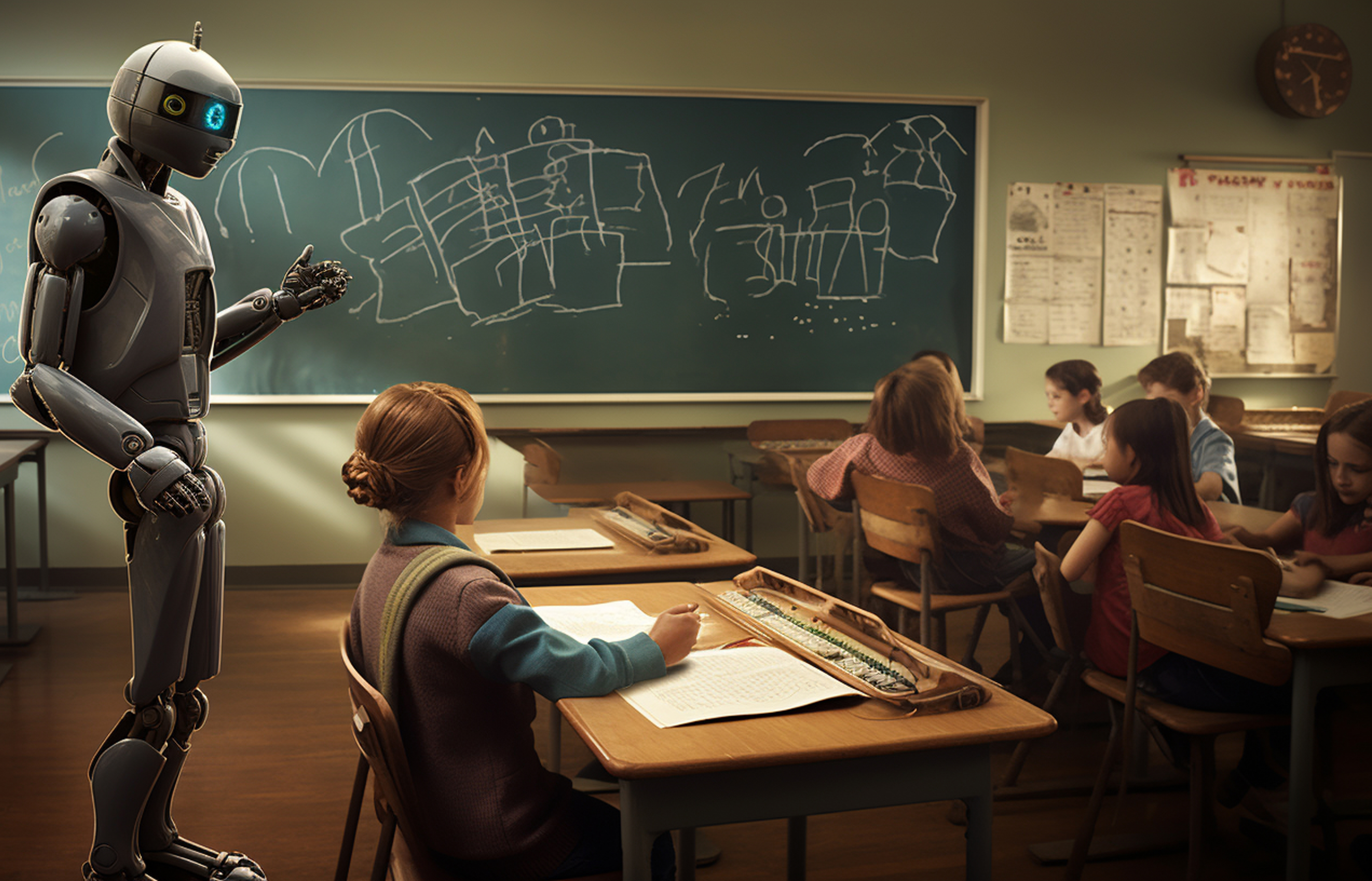
Teachers often spend hours on repetitive tasks.
What AI Automates
- Attendance
- Grading
- Report cards
- Class scheduling
- Assignment checking
- Feedback generation
- Plagiarism detection
Key Research Statistics
- McKinsey: Teachers can save up to 13 hours per week using AI automation.
- UNESCO: AI-integrated classrooms report 15% higher teaching satisfaction due to reduced non-teaching workload.
AI Tools Helping Teachers
- Google Classroom AI
- Turnitin AI detection
- Gradescope for auto-grading
- ClassPoint AI for feedback
- Canva AI for lesson slides
This shift lets teachers focus on mentorship, creativity, and student relationships.
6. Learning Analytics & Predictive AI
AI learning analytics uses data to improve learning outcomes at scale.
What It Tracks
- Learning patterns
- Student weaknesses
- Dropout risk
- Engagement levels
- Assignment performance
- Personality and learning preferences
Use Cases
- Georgia State University reduced dropout rates by 22% using predictive analytics.
- Arizona State University improved course pass rates using AI-powered alerts.
- IBM Skills Academy uses analytics to recommend personalized career paths.
Predictive AI ensures no student “falls through the cracks.
7. AI for Students With Disabilities: Creating Inclusive Classrooms

AI is transforming accessibility and enabling inclusive learning environments.
Assistive AI Technologies
- Speech-to-text tools for hearing-impaired learners
- AI reading assistants for dyslexia
- Emotion-recognition apps for autistic learners
- Real-time translation for multilingual classrooms
- AI sign language avatars for the deaf
Global Examples
- Microsoft’s Seeing AI helps visually impaired students identify objects.
- Google’s Live Transcribe supports deaf learners.
- IBM’s Watson Classroom adapts content for cognitive disabilities.
AI is breaking barriers for millions of underserved learners globally.
8. Immersive Learning: AI + AR/VR = Experiential Education

AI enhances AR/VR to create realistic simulations that improve learning outcomes.
Examples
- Medical students practice surgeries using AI-enhanced VR systems.
- Engineering students explore virtual labs with real-time feedback.
- History students “live” historical events through VR reenactments.
- Language learners converse with AI-generated virtual humans.
Research Insight
Harvard University reports immersive learning can increase knowledge retention by 75%, compared to 10% in traditional lectures.
AI + AR/VR moves education from textbooks to experiential, hands-on learning.
9. AI in Higher Education & Research
Universities are rapidly adopting AI for multiple purposes:
Applications
- Automated research summarization
- AI-powered literature reviews
- Lab experiments optimization
- Student performance prediction
- Research data modeling
AI Tools Used
- ChatGPT for research assistance
- IBM Watson Discovery
- Scite.ai for citation accuracy
- Semantic Scholar
- Elicit (AI research assistant)
Universities such as MIT, Oxford, and Stanford have launched dedicated AI-in-Education labs to explore the next generation of learning.
10. AI for Vocational Training and Workforce Upskilling
Corporate training is also being disrupted.
Use Cases
- Personalized employee training
- Skill gap analysis
- Simulation-based training (healthcare, aviation, manufacturing)
- AI-powered LMS systems
- AI-led coding tutors in IT fields (GitHub Copilot, AWS CodeWhisperer)
Research Data
- LinkedIn’s Workplace Report shows 94% of employees want AI-driven personalized learning.
- IBM found AI upskilling reduced training time by 40%.
AI-based learning boosts workplace efficiency and reduces training costs.
11. Challenges & Risks of AI in Education
Despite benefits, there are serious considerations.
1. Data Privacy Risks
Student information, learning behavior, facial data, etc. can be misused if not regulated.
2. Bias in AI Algorithms
Biased datasets may deliver unfair assessments or recommendations.
3. Teacher Resistance
Many teachers fear AI will replace them or feel unprepared for digital tools.
4. Digital Divide
UNICEF reports 1/3 of students globally lack digital access, creating inequalities.
5. Ethical Issues
- Student surveillance
- Over-dependence on automation
- Reduced human interaction
The future requires strong policies, teacher training, AI ethics frameworks, and equitable access.
12.The Future of AI-Powered Education
The next decade will bring revolutionary changes:
1. Personal AI Tutors for Every Student
Always available, affordable, multilingual, adaptive.
2. Emotion-Aware Learning Systems
Recognize frustration, boredom, or confusion.
3. Fully Intelligent Classrooms
Sensors + AI will adjust lighting, temperature, and content dynamically.
4. Personalized Exams for Every Learner
No two students will receive the same test.
5. AI-Driven Career Pathways
Automated guidance based on skill analytics.
6. Virtual Metaverse Schools
Using AI-powered avatars and immersive 3D campuses.
7. Government-Backed AI Curriculum
Countries like China, UAE, USA, and South Korea already teach AI from Grade 3.
8. Hybrid Human+AI Teaching Models
Teachers will shift from “content deliverers” to:
- Mentors
- Strategists
- Creativity coaches
- Emotional intelligence leaders
AI will become an educational partner, not a replacement.
Conclusion
AI is not just enhancing education, it is redefining it.
From personalized pathways and intelligent tutoring to automating teacher workloads and enabling inclusive learning, AI is building a future where education is:
- More accessible
- More equitable
- More adaptive
- More efficient
- More engaging
As global adoption accelerates, the real opportunity lies in combining human expertise with AI intelligence to create learning experiences that empower every student, improve teaching quality, and unlock lifelong learning at scale.
The future of learning is AI-driven, human-centered, personalized, and limitless.
Ready to Build AI-Powered Learning Experiences?
Artificial Intelligence is transforming education, and the organizations leading this shift are the ones investing in smarter, adaptive, and future-ready digital solutions.
If you’re looking to integrate AI into your learning platform, build personalized learning systems, or create intelligent web and mobile applications…
Ambsan Digital can help.
We specialize in:
✔ Custom AI-powered educational platforms
✔ Mobile & web app development
✔ Smart learning management systems (LMS)
✔ EdTech product design & UI/UX
✔ Automation and digital transformation
✔ Scalable cloud-based architectures
✔ Data analytics dashboards for student insights
With a proven track record serving global clients, our team brings the expertise, innovation, and commitment needed to turn your EdTech vision into a real, high-performing product.